¿CUÁLES SON LOS DISTINTOS TIPOS DE BIORRETROALIMENTACIÓN?
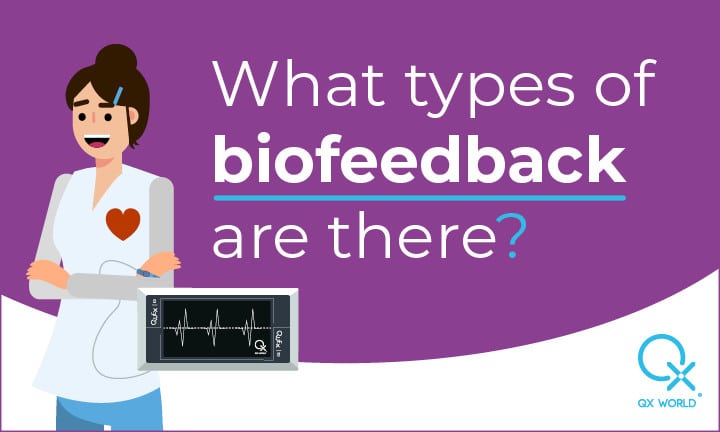
In our previous post, we explained what biofeedback is and how it can help you control your body’s involuntary functions. Using a specialist device, a biofeedback therapist measures certain physiological signals and teaches you various techniques to change the measurements at will to lower your heart rate, to relax your breathing pattern, … But there is no one-size-fits-all approach. Depending on what you want to measure and gain control over, different types of biofeedback exist. In this article, we offer an overview of the most common types of biofeedback methods.
1. Biorretroalimentación respiratoria
Respiratory biofeedback assesses breathing rates and patterns. The therapist places sensor bands around your chest and abdomen to do measuring, and then walks you through various exercises which you will ultimately learn to apply yourself at home or in any other environment. This biofeedback method proves particularly helpful for people experiencing anxiety in a variety of situations.
2. Biorretroalimentación térmica
Thermal biofeedback measures body temperature. More specifically, it looks at the hands. The idea is that, when we feel stressed, blood is diverted from the limbs to the muscles and organs to improve our ability to fight or flee. Our hands, in other words, experience a drop in temperature when we feel all but relaxed. Through thermal biofeedback training, people can learn how to control their own thermal state and, by doing so, minimize or eliminate the effects of stress on their body. Thermal biofeedback is known to reduce migrañas and can be helpful in relieving symptoms associated with Raynaud’s disease.
3. Electroencefalografía (EEG)
Electroencephalography (EEG) or neurofeedbackmonitors brain waves (the electrical impulses your brain cells use to communicate with each other). To measure brainwave activity, the therapist places sensors on the scalp – you can rest assured that EGG is a painless process – which are connected to a neurofeedback device such as the QUEX ED or QUEX S.
If unusual brain activity is detected, the neurofeedback device identifies what is causing the problem. You may, for example, be suffering from ADHD which causes you to have a limited attention span. During a series of neurofeedback sessions, the therapist can then help you train your brain to become more efficient and stay focused longer. Most neurofeedback sessions involve some type of movie or video game which you can (learn to) manipulate using only your brain power.
4. Electromyography (EMG)
Electromyography (EMG) looks at muscle tension. The therapist places sensors on different parts of the body, which are each connected to a QUEX ED or QUEX S device. The device registers the electrical activity of the muscles during rest (when they normally produce no electrical signals), and when the muscles contract, for example when the therapist asks you to bend your arm. This kind of biofeedback is commonly used to help detect neuromuscular abnormalities.
5. Electrocardiografía (ECG)
Electrocardiography (ECG) checks out frecuencia cardiaca y pulso. By means of sensors placed on the chest, wrist or legs, the QUEX ED or QUEX S device measures the electrical activity of the heart. Biofeedback therapists use the ECG method on people who suffer from asthma, heart conditions, COPD, abdominal pain, anxiety, depression, …
6. Electrodermografía (EDG)
Electrodermography (EDG) monitors how the piel y glándulas sudoríparas respond to emotional stimuli such as stress. Sensors are placed on the fingers or hand and wrist, enabling the QUEX ED or QUEX S device to measure the body’s response to unexpected stimuli such as arousal or stress. Increasing the subject’s awareness of different emotions, EDG is a popular support method for psychotherapeutic purposes and commonly used by therapists to help people deal with anxiety disorders and excessive sweating.
7. Biorretroalimentación cuántica
At QX WORLD, we not only specialize in the abovementioned types of biofeedback but also in an advanced field of biofeedback which is called quantum biofeedback. Rather than feeding information back to your conscious mind, quantum biofeedback focuses on the unconscious nervous system. While other biofeedback methods have you consciously monitoring your body’s responses to certain stimuli, a quantum biofeedback device also re-educates your unconscious system (the automatic system or ‘body electric’).
Eager to learn more? Stay tuned for our next articles!
Publicado el
No se pierda las últimas noticias de QX World. Suscríbase a nuestros boletines.