
QUEX ED vs EDUCTOR vs SCIO: Which Biofeedback Device Should You Choose?

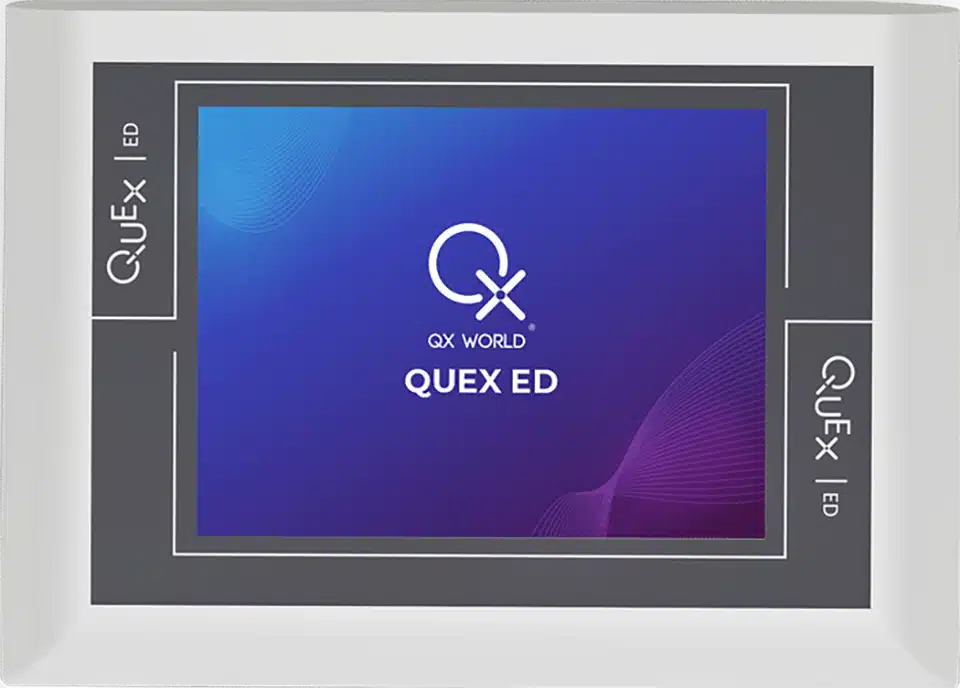
QUEX LED display showing QX World logo

Author: Andreea Taflan | Last updated: 8 September 2026

If you are comparing QUEX ED®, EDUCTOR® und SCIO, you probably already understand biofeedback. The real question is which device makes sense for your practice now.

SCIO and EDUCTOR helped shape Quanten-Biofeedback, and many experienced practitioners still work with them. QUEX ED comes from the same line of technology, but it brings the hardware up to date, increases processing capacity and frequency range, and works with the current OMNIS® software.

So which one should you choose?

If you already own a SCIO or EDUCTOR, the decision is whether the upgrade will improve the way you work. If you are buying your first professional system today, QUEX ED is the clearest long-term choice.

QUEX ED vs EDUCTOR vs SCIO at a glance

QUEX ED updates the full system: signal capture, processing, frequency generation and software.

It includes dedicated EEG, ECG and EMG hardware, three proprietary frequency generators and a frequency range of up to 2.5 MHz. This biofeedback device comparison sets out the differences row by row.

QUEX ED vs EDUCTOR vs SCIO: feature comparison
MerkmalSCIOEDUCTORQUEX ED
GenerationLegacyLegacyCurrent QX World flagship
Frequency range0 to 25 kHz0 to 2,000 kHzUp to 2,500 kHz (2.5 MHz)
Frequency generators1Legacy architecture3
Phase controlNo phase shiftingLegacy architecture0 to 360°, 0.1° resolution
Dedicated physiological signal hardwareKeineEarlier-generation architectureDedicated EEG, ECG and EMG chips
SamplingEarlier-generation architecture1× reference12× sampling
ProcessingLegacy processorOlder processor generationCurrent-generation processor
Software environmentLegacy softwareLegacy softwareOMNIS
Development statusLegacy platformLegacy platformCurrent platform
Best suited toExisting owners continuing with familiar equipmentExisting experienced usersProfessional practitioners investing in current QX World technology
Pricing contextLegacy platform; confirm current availability and costLegacy platform; confirm current availability and costCurrent flagship; request a quote for your region and package
Support and updatesLegacy platformLegacy platformCurrent platform with QX Academy training and ongoing educational support
Professional or home useExisting practitioner workflowsExisting practitioner workflowsProfessional practice; ask QX World about personal or home-use needs

QUEX ED: the current flagship

QUEX ED Biofeedback-Gerät

QUEX ED is QX World’s current flagship professional biofeedback system. It is the newest step in the technology behind SCIO and EDUCTOR.

One of the clearest hardware differences is the use of three frequency generators. They can run simultaneously while the system receives the client’s bio-signals. SCIO uses one generator.

QUEX ED also has dedicated EEG, ECG and EMG chips. Each is designed for its own type of physiological signal instead of sending every signal through the same general hardware path.

Its frequency range reaches 2.5 MHz, compared with 25 kHz for SCIO and 2 MHz for EDUCTOR.

Sampling has also increased. EDUCTOR uses the single-sampling reference described in QX World’s comparison material; QUEX ED uses 12× sampling, giving OMNIS more incoming data to work with during a session.

QX World’s technical material also reports processing performance up to 400% faster than EDUCTOR. In practice, that is intended to make communication between the device and software more responsive.

Together, these changes give the practitioner faster processing, more sampling, dedicated signal hardware and more flexible frequency output.
QUEX ED and OMNIS

OMNIS is also part of the purchase decision.

QUEX ED works with OMNIS, QX World’s current software. OMNIS receives the bio-signals from the device, processes them against its signature matrix and gives the practitioner one environment for assessment, training and balancing.

Compared with legacy SCIO systems, OMNIS has an updated interface and expanded programs.

That matters when you are buying a system for years of professional use. The software, programs, training, accessories and ongoing development are part of the investment too.

EDUCTOR: an important step between generations

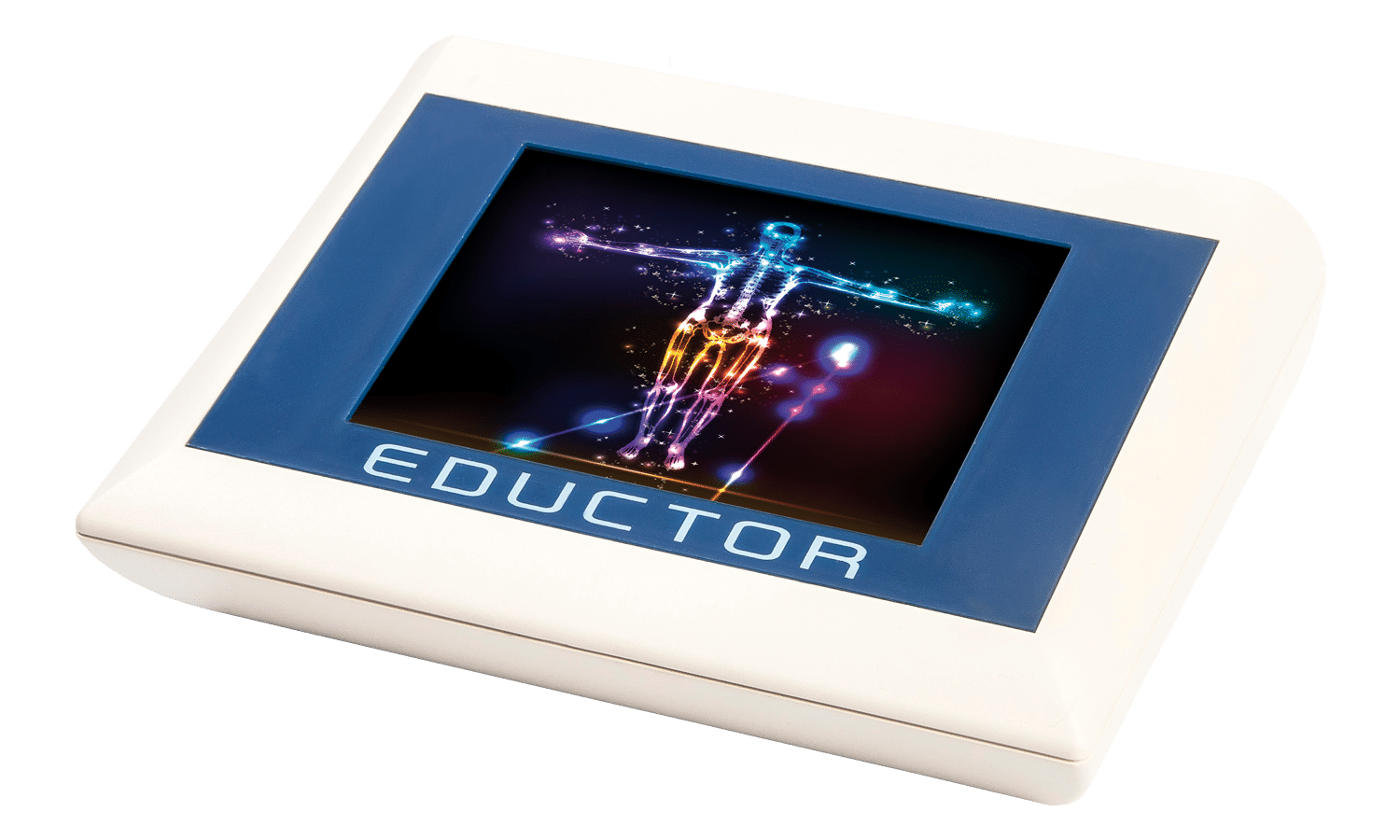
EDUCTOR biofeedback device

EDUCTOR sits between SCIO and QUEX ED. In some areas, it is much closer to the current device.

Its frequency range reaches approximately 2 MHz, far above SCIO’s 25 kHz and close to QUEX ED’s 2.5 MHz.

The wider comparison still matters more than that single number.

QX World’s comparison material dates EDUCTOR’s hardware generation to around 2012 and QUEX ED’s to 2021. EDUCTOR uses the earlier processor generation and a single sampling reference; QUEX ED increases sampling to 12×.

QX World’s material also reports QUEX ED processing performance up to 400% faster than EDUCTOR.

For an experienced EDUCTOR practitioner, upgrading keeps the underlying approach familiar while moving the practice to newer hardware and software.
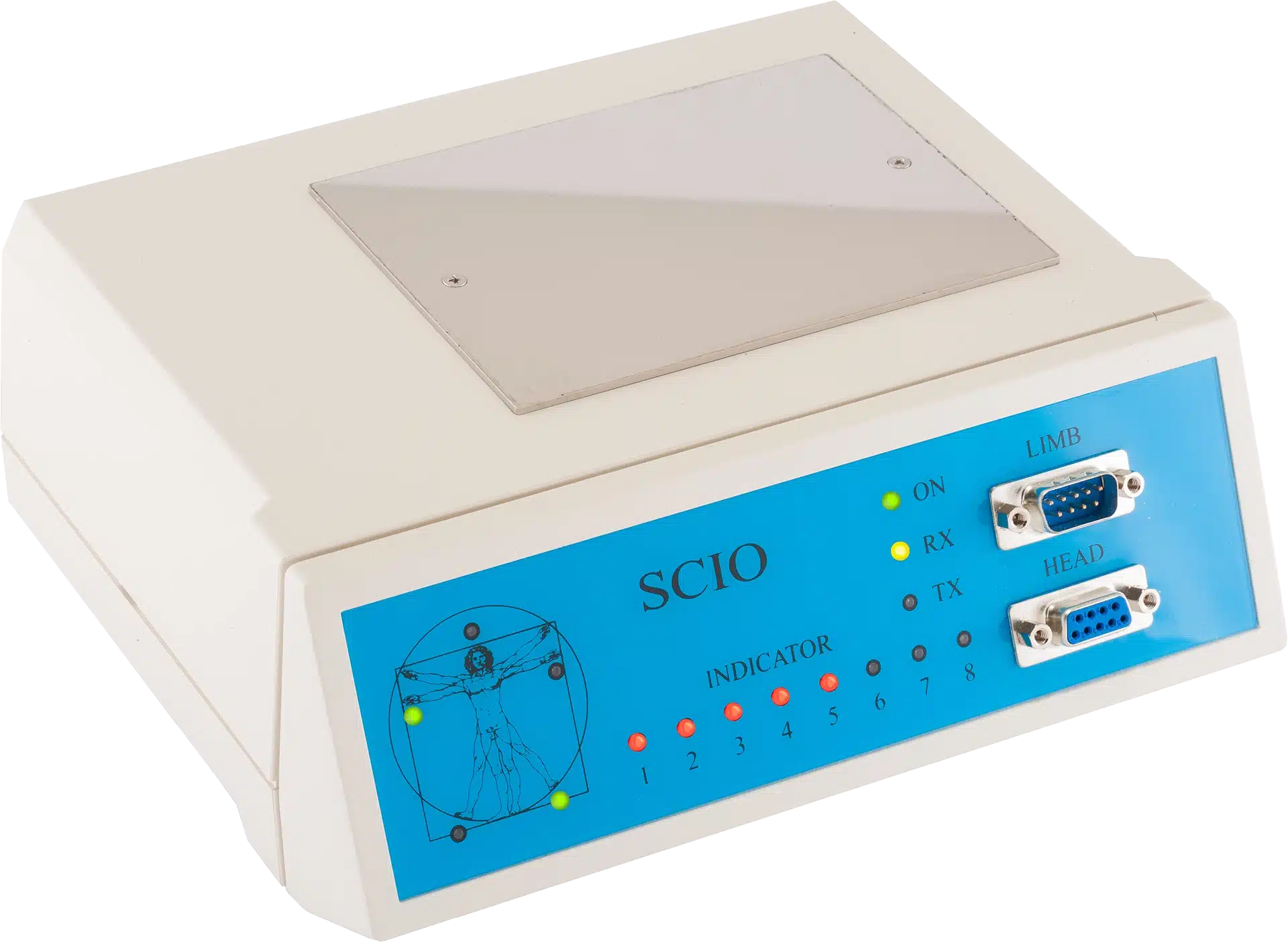
SCIO: the system that started many practices

SCIO-Biofeedback-Gerät

Many experienced practitioners already know SCIO well.

It became one of the best-known systems in quantum biofeedback, and some practitioners have spent years developing their own way of working with it. That familiarity has real value.

SCIO uses an older hardware architecture.

It reaches approximately 25 kHz and uses one frequency generator. QUEX ED reaches 2.5 MHz, uses three generators and includes dedicated EEG, ECG and EMG chips that SCIO does not have.

The software and processing environment have changed as well. QUEX ED was built for modern processing and OMNIS; it is not simply SCIO in a newer case.

Existing owners should judge the upgrade against the way they already work.

If your SCIO still does what you need and you know it inside out, continuing with it may be reasonable. The case for upgrading becomes stronger when its age, technical limits or software start to hold back the way you want to work.

A new buyer has less reason to start with legacy hardware because there is no existing workflow or familiarity to protect.
The biggest differences in everyday practice

Specifications only help if they explain what changes during a session. These are the differences that matter most in day-to-day practice.

1. Three frequency generators

QUEX ED can run three frequency generators at the same time. SCIO uses one. This gives QUEX ED more flexibility in the frequency outputs used during a session.

This is a hardware difference, not a feature added later through software.

2. A much broader frequency range

The ranges are:

  • SCIO: up to 25 kHz
  • EDUCTOR: up to 2,000 kHz
  • QUEX ED: up to 2,500 kHz

QUEX ED therefore has a much broader working spectrum for the frequency-based programs in its software.

3. Dedicated EEG, ECG and EMG hardware

QUEX ED incorporates dedicated hardware for EEG, ECG and EMG signal acquisition.

This starts at hardware level. The dedicated components are built to acquire and process those physiological signals, rather than simply displaying them in software.

4. More sampling

Biofeedback relies on information moving between the client, device and software.

QUEX ED uses 12× sampling instead of the earlier single-sampling approach. Together with the faster processor, this gives OMNIS a more responsive flow of incoming data.

5. Current software and continuing development

For a professional purchase, this may be the most important difference.

SCIO and EDUCTOR are legacy platforms. QUEX ED is QX World’s current flagship and works with OMNIS.

QX World’s current software, training and product development are built around this platform.

QX Academy provides training and ongoing educational support for the current system.

6. Pricing and purchase context

Price alone does not create a fair comparison. SCIO and EDUCTOR are legacy platforms, while QUEX ED is the current flagship. Ask for a current quote and check what the package includes: hardware, software, training, accessories and support.

If you already own a legacy device, compare the cost of continuing with it against the value of moving to the current platform. If you are buying for the first time, compare the complete professional setup rather than the device price on its own.

7. Home use or professional practice

This comparison is for practitioners buying a professional system. QUEX ED is designed for professional practice.

If you are looking for a personal or home-use device, speak with a QX World representative before choosing. A professional device comparison does not automatically answer which setup is appropriate for home use.

Which device should you choose?

SCIO and EDUCTOR did not become useless when newer hardware arrived. Experienced practitioners may still get good value from equipment they know extremely well.

But keeping a device you already own is a different decision from buying one today.

If you already own a SCIO and are happy with it, keep using it while it still supports the way you work. Consider QUEX ED when the older hardware, software or technical limits begin to matter.

If you already own an EDUCTOR, the frequency range is not the main reason to upgrade. The stronger case is the newer processor, 12× sampling, dedicated signal hardware and OMNIS.

If you want the most capable system in this comparison, choose QUEX ED. It is QX World’s current flagship and offers the full hardware capability of the present platform.

If you are starting a professional quantum biofeedback practice today, QUEX ED is the sensible place to start. You are buying current hardware and software rather than building a new practice around a legacy platform.

This is a long-term professional purchase. Look at the system you want to work with over the next several years, not only what it can do on the day you buy it.

What about the learning curve?

If you are moving from SCIO or EDUCTOR, you are not starting from zero.

The terminology, biofeedback principles and much of the practitioner workflow will already feel familiar. The main change is learning OMNIS and using the extra capability of the newer hardware.

New QX World practitioners can follow structured training from foundational operation through more advanced use.

Training should be treated as part of the investment. Even the most capable device depends on the practitioner knowing how to use it well.

QUEX ED vs SCIO vs EDUCTOR: the bottom line

SCIO, EDUCTOR and QUEX ED represent three generations of related technology.

SCIO established the platform. EDUCTOR increased the frequency range and moved the hardware forward. QUEX ED adds three generators, a range of up to 2.5 MHz, dedicated EEG, ECG and EMG hardware, 12× sampling, faster processing and OMNIS.

If you already own a SCIO or EDUCTOR, familiarity may be a good reason to keep it.

If you are buying a professional system today, QUEX ED is the strongest long-term choice of the three. It combines what practitioners know from the earlier systems with QX World’s current hardware, software and development platform.

Frequently asked questions

QUEX ED vs EDUCTOR vs SCIO: which device should I buy?

If you are buying a professional biofeedback system today, QUEX ED is the strongest long-term choice of the three. It is QX World’s current flagship: three frequency generators, a frequency range up to 2.5 MHz, dedicated EEG, ECG and EMG hardware, 12× sampling and the current OMNIS software. SCIO and EDUCTOR are legacy platforms that can still serve practitioners who already own them and know them well, but they do not offer the same current hardware, software or ongoing development.

For the full biofeedback device comparison, see the table and the section-by-section breakdown above, or read our overview of Quanten-Biofeedback for the wider context.

What is the main difference between QUEX ED and SCIO?

SCIO uses one frequency generator and reaches approximately 25 kHz. QUEX ED uses three generators, reaches up to 2.5 MHz and includes dedicated EEG, ECG and EMG hardware with newer processing architecture.

What is the difference between EDUCTOR and QUEX ED?

EDUCTOR reaches approximately 2 MHz, compared with QUEX ED’s 2.5 MHz. The bigger differences are the hardware generation, processor, sampling, dedicated signal processing and OMNIS. QX World’s comparison material reports QUEX ED processing performance up to 400% faster than EDUCTOR.

Does QUEX ED use OMNIS?

Yes. QUEX ED is designed for QX World’s current OMNIS software. Compared with legacy SCIO systems, OMNIS has an updated interface and expanded programs.

Should an experienced SCIO or EDUCTOR practitioner upgrade?

Upgrade when the limits of the existing system affect the way you want to work. The case is strongest if you need newer processing, broader hardware capability, OMNIS compatibility and access to QX World’s current platform.

Which is the best biofeedback device for practitioners: SCIO, EDUCTOR or QUEX ED?

For a professional system purchased today, QUEX ED is the current and most capable QX World option of the three. SCIO and EDUCTOR can still serve practitioners who already know and own them, but they do not offer the same current hardware and software.

How should I compare prices for QUEX ED, EDUCTOR and SCIO?

Request a current quote and compare the full setup, including hardware, software, training, accessories and support. SCIO and EDUCTOR are legacy platforms, so their cost is not directly comparable with a current QUEX ED package.

Are these devices intended for home use or professional practice?

This guide compares them as professional practice systems. If you need a personal or home-use option, ask QX World which current product and configuration fit that purpose.

Ready to see the difference in practice?

A specification sheet shows what changed. A demonstration lets you see how QUEX ED fits the way you work.

Book a QUEX ED demonstration oder speak with a QX World representative to decide whether it is the right next step for your practice.

Verpassen Sie nicht die neuesten Nachrichten von QX World. Abonnieren Sie unsere Newsletters!
Wenn Sie auf "Abonnieren" klicken, stimmen Sie zu unsere Datenschutzpolitik Dazu gehört, dass wir Ihre Daten speichern und verarbeiten, um Ihnen die gewünschten Informationen zukommen zu lassen.

Teilen Sie diese Geschichte, wählen Sie Ihre Plattform: