
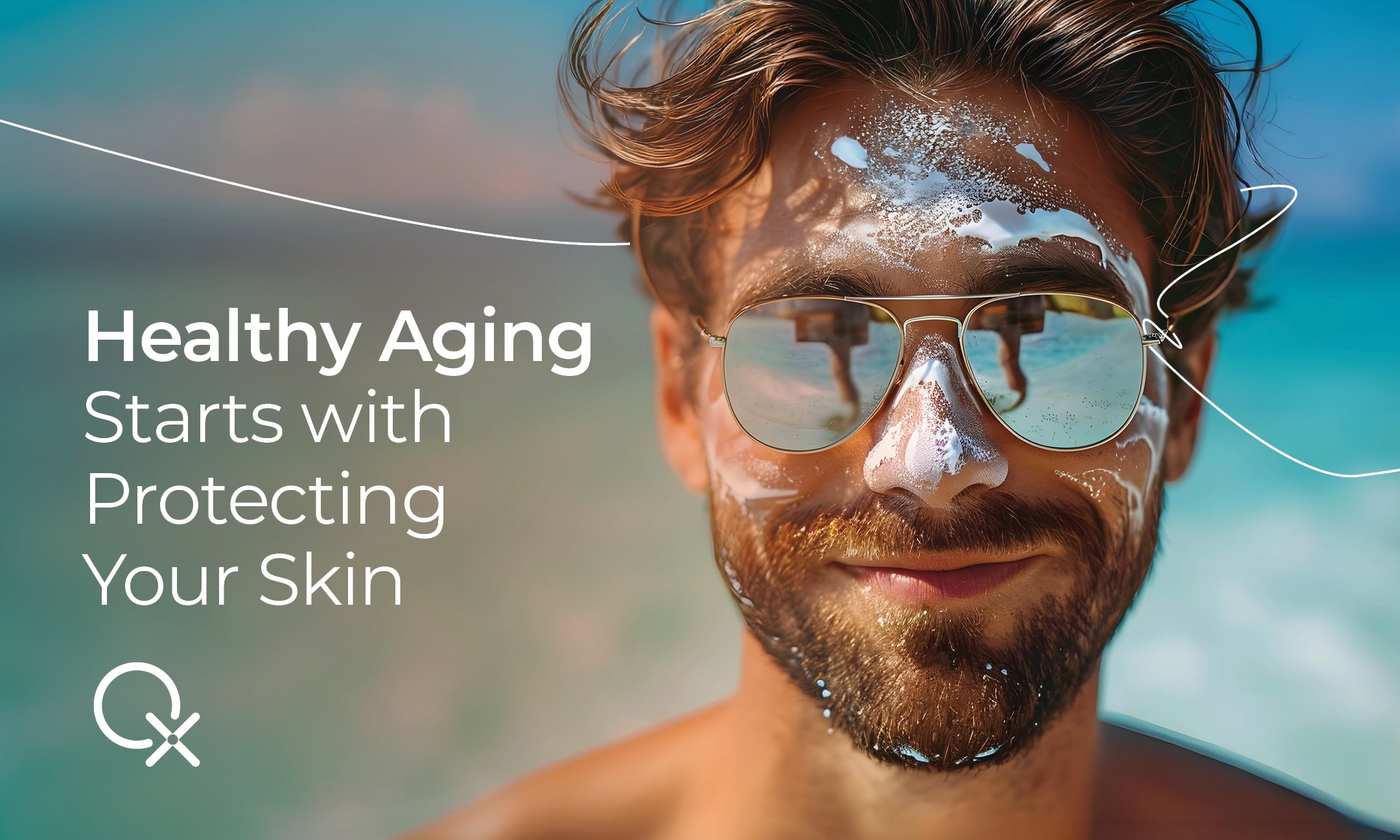

Sun damaged skin refers to changes caused by repeated ultraviolet exposure from the sun or artificial UV sources. It may appear as fine lines, uneven tone, dark spots, rough texture, dryness, visible blood vessels, reduced elasticity, or changes that need professional evaluation.
Skin damage from sun exposure affects collagen, elastin, pigment regulation, cellular repair, and long-term skin health. Over time, this can contribute to photoaging, pigmentation changes, roughness, and increased risk of precancerous or cancerous skin changes.
Natural aging happens over time and is influenced by genetics, hormones, ethnicity, lifestyle, and biology. Photoaging refers to skin changes linked to repeated UV exposure, especially on areas such as the face, chest, hands, and arms. The two processes often overlap: a person’s skin changes with age, and skin damage from sun exposure can add to those visible changes through uneven pigmentation, deeper lines, rougher texture, broken capillaries, sun spots, or reduced elasticity.
At the same time, these changes do not always need to be viewed with fear or treated as flaws. Some signs of sun damage are part of the visible story of a lived life: years spent outdoors, seasons passed, genetics, aging, healing, and the skin’s natural response to the environment. The goal is not flawless or filtered skin, but healthy skin that is protected, supported, and respected as it changes.
A thoughtful approach to sun damaged skin includes prevention, monitoring, natural support, lifestyle awareness, and acceptance of the skin as something living, changing, and individual. In many cases, visible changes can be approached with acceptance, gentle care, protection, and realistic expectations. That said, acceptance should still include awareness. Any new, changing, bleeding, crusting, painful, or non-healing spot should be professionally evaluated.
Sun damaged skin develops when repeated UV exposure changes the structure, function, and appearance of the skin. It can affect any area of the body, but it is especially common in areas that receive regular sunlight, such as the face, neck, chest, hands, shoulders, and arms.
UV radiation can affect skin cells, pigment production, collagen, elastin, blood vessels, and the skin barrier. UVA rays penetrate more deeply and are strongly linked with photoaging. UVB rays are more associated with sunburn, although both UVA and UVB can contribute to skin damage from sun exposure.
The skin responds to UV exposure by producing more melanin, increasing inflammation, and activating repair processes. When exposure is repeated over years, visible signs of sun damage may begin to appear.
Sun damage accumulates because UV exposure affects skin cells repeatedly. A single sunburn can injure the skin, but daily exposure over years also matters. Walking outside, driving, gardening, beach days, outdoor work, sports, and childhood sun exposure all contribute to the skin’s long-term history.
Genetics and ethnicity influence how sun damaged skin appears. Lighter skin tones may show redness, freckles, wrinkles, sun spots, and small white spots more visibly. Deeper skin tones may show uneven tone, dark patches, texture changes, or delayed recognition of concerning changes. Some people also develop small lighter or white spots after years of sun exposure, especially on the arms and legs. These are sometimes called idiopathic guttate hypomelanosis, but white spots can have several causes and should be assessed if they are new, spreading, or changing. All skin tones can experience skin damage from sun exposure, and all skin tones need protection.
The early signs of sun damage can be subtle. They may develop slowly and become noticeable only after years of exposure.
The answer depends on skin tone, age, genetics, exposure history, and the area affected. Advanced sun damaged skin may show more noticeable changes in texture, color, elasticity, and structure.
Some changes may be cosmetic, but others should be checked. Any new, changing, bleeding, crusting, painful, or non-healing spot should be evaluated by a qualified professional. This is especially important in areas with long-term sun exposure, including the face, scalp, ears, chest, hands, and arms.
Searches such as skin cancer sun damaged skin on arms often come from concern about spots, rough patches, or changing marks on the forearms or hands. These areas are commonly exposed to sunlight and should not be ignored. If there is concern about skin cancer and sun damaged skin on arms, professional assessment is the safest step.
UV exposure accelerates skin aging because it affects the skin’s structure, cellular repair systems, and ability to recover from environmental stress. The visible surface changes are only part of the story.
Key processes include:
Skin resilience is shaped by more than skincare. Genetics, ethnicity, hormones, age, stress, sleep, nutrition, movement, hydration, and environment all influence how the skin responds and recovers.
Key lifestyle factors include:
Some dryness, dullness, mild uneven tone, roughness, and early texture changes may improve with consistent care. This may include sun protection, moisturizers, carefully chosen active ingredients, antioxidant support, hydration, sleep, relaxation, and reduced irritation. Natural care can also play a role. Choosing pure, low-irritant products, avoiding harsh exfoliation, and supporting the skin barrier may help the skin look calmer and healthier over time.
Some changes may be more difficult to reverse. Deep wrinkles, significant elastin damage, advanced texture changes, scarring, and some pigment changes may not fully disappear. Professional procedures may improve some signs of sun damage, but expectations should be realistic.
Improvement does not have to mean perfection. It can mean healthier texture, better comfort, fewer new spots, more resilience, and a more accepting relationship with the skin.
Why Prevention Matters Most
Prevention matters because UV damage accumulates. Protecting the skin now can help reduce future skin damage from sun exposure and support long-term skin health.
Prevention may include seeking shade, wearing hats and sunglasses, using protective clothing, avoiding peak UV hours, choosing sunscreen carefully, reading ingredients, avoiding tanning beds, checking skin regularly, and supporting sleep, nutrition, hydration, and stress regulation.
Sunscreen should be chosen thoughtfully. Some formulas may irritate sensitive skin or raise personal health or environmental concerns, so it is worth reading labels and choosing products that suit your skin, values, and level of exposure.
After years of sun exposure, the goal is not to erase every mark of life. It is to support healthier skin function, reduce avoidable damage, monitor changes, and care for the skin in a way that fits the individual. Sun damaged skin does not look the same on everyone. Genetics, ethnicity, occupation, outdoor habits, hormones, medications, skincare history, and lifestyle all matter. This is why one-size-fits-all skin care rarely works. Care should be adapted to age, skin tone, sensitivity, life stage, health history, and daily circumstances.
Stress, poor sleep, and internal strain may also influence skin resilience, cellular stress, recovery, and daily habits. Relaxation, breathwork, mindful rest, gentle movement, and quantum biofeedback programs such as S-ENSO can support overall balance and help individuals observe how the body responds to stress and recovery demands.
Kvantum biofeedback programs such as S-ENSO may be especially useful as part of a relaxation, rejuvenation, and self-regulation routine. By supporting awareness of stress patterns, tension, breathing, and recovery responses, this approach may help the body move toward a more balanced state. From that place of greater balance, the body may be better supported in its natural processes of repair, cellular recovery, circulation, collagen and elastin support, rest, resilience, and overall wellbeing.
Can sun damaged skin heal naturally?
Some signs may improve with time, protection, hydration, barrier support, and reduced irritation. Deeper changes may not fully reverse.
Can Sun Damaged Skin Improve Over Time?
Sun damaged skin can often improve in appearance, but not every change is fully reversible. The best results usually come from prevention, consistency, gentle care, and early attention to concerning changes.
What does sun damaged skin look like?
Sun damaged skin may appear as fine lines, wrinkles, dark spots, uneven tone, rough texture, broken capillaries, dryness, or leathery skin. What does sun damage look like can vary by skin tone, genetics, age, and exposure history.
What are the first signs of sun damage?
Early signs of sun damage include uneven tone, dryness, fine lines, freckles, increased sensitivity, and texture changes. Sun damaged skin on face often shows these changes before other areas because the face receives daily exposure.
Can sun damage increase skin cancer risk?
Yes. Skin damage from sun exposure can increase the risk of precancerous and cancerous skin changes. New, changing, bleeding, crusting, or non-healing spots should be evaluated.
Can collagen recover after sun damage?
Some collagen support may improve with consistent care, sun protection, nutrition, and targeted skincare. Advanced collagen and elastin damage may not fully reverse.
Does stress affect skin aging?
Stress can influence sleep, inflammation, hormones, cellular stress, daily habits, and the skin’s ability to recover.
How can I support healthy skin as I get older?
Support healthy skin with sun protection, gentle skincare, natural low-irritant products, hydration, balanced nutrition, movement, sleep, stress regulation, and regular skin checks. Healthy aging is not about unmarked skin. It is about caring for skin as it changes.
What is the difference between photoaging and natural aging?
Natural aging happens with time and genetics. Photoaging is premature skin aging caused by repeated UV exposure, especially on sun-exposed areas such as the face, chest, hands, and arms.
Sun damaged skin reflects years of exposure, genetics, ethnicity, aging, lifestyle, and the body’s response to the environment. It may appear as fine lines, dark spots, uneven tone, rough texture, dryness, or reduced elasticity.
The goal is not to erase every sign of life. Skin changes are part of living, aging, healing, and spending time in the world. A balanced approach includes sun protection, gentle natural products, careful ingredient choices, regular skin monitoring, lifestyle support, and acceptance of the skin as it changes.
With consistency, many signs of sun damage can look calmer and healthier over time, while prevention helps protect the skin for the years ahead.
For more information on how biofeedback may support stress awareness, relaxation, self-regulation, and whole-person wellbeing, besök vår webbplats.